Applying for a Place at our School
To join our school, your child must have an Education, Health and Care Plan (EHCP) in place. Learners who are identified as having additional needs but do not yet have an EHCP, will need to undergo the Education, Health and Care Assessment Request (ECHAR) process. If capacity allows, Three Bridges may support local authorities, families, and learners in gaining an EHCP by offering a short-term placement whilst all assessments are completed. If, following assessment, a learner is given an EHCP, admission will be considered to Three Bridges in line with our Admissions Policy.
We have a formal admissions procedure which is outlined in our Admissions Policy and which ensures we are able to meet a learner’s needs.
Our school works with learners aged between 11 and 19 who have special educational needs mainly within the areas of Social and Emotional and Mental Health (SEMH) and communication difficulties However, we can also support learners with a wide range of needs falling within the broad categories of Communication and Interaction, Cognition and Learning, Physical and Sensory and SEMH.
Learners can join our school at any time during the school year and will follow a personalised curriculum package to meet their individual needs.
Our caring and committed staff team will spend time getting to know you and your child during a carefully planned transition, to ensure they feel safe, settled, secure, and ready to learn.
Book a personalised tour of our school using our Book a Visit button. Or, alternatively, contact your current provision or Local Authority SEND Co-ordinator for more information about joining our unique and special school.
To read our Admissions Policy, please visit our Policies Page
Learner Case Studies
We love to celebrate our learners’ successes and achievements! We are proud to share with you some of the stories of how the school and our incredible team have supported learners to fulfil their potential.
Learner A
Background
Learner A has a diagnosis of ADHD and experiences difficulties with coordination, attention and concentration. They also have sensory sensitivities, particularly to loud noises and crowded environments. Prior to joining Three Bridges, Learner A attended a mainstream school where they experienced bullying and behavioural difficulties. As a result, they were out of formal education for a significant period of time.
These experiences had a negative impact on Learner A’s confidence and self-esteem. They found social situations challenging, avoided group activities and fell behind academically, missing key learning opportunities.
Starting at Three Bridges
When Learner A joined Three Bridges, engagement was initially difficult. They struggled to build trust with staff and peers, found attending school overwhelming, and attendance was low. Recognising Learner A’s past experiences of trauma and disrupted education, a careful and trauma-informed transition plan was put in place.
Trauma-Informed Support
Using trauma-informed approaches, staff focused on helping Learner A feel safe, understood and supported. This included:
-
A gradual and personalised transition into school
-
Predictable routines and a carefully structured timetable
-
Access to quiet spaces to support sensory regulation
-
Modified activities and learning approaches tailored to individual needs
-
Regular positive feedback and reassurance to build self-esteem
-
Allowing additional processing time
-
Opportunities for outdoor learning and learning within the community
Staff prioritised building trusting relationships, offering consistency, and responding calmly and flexibly to Learner A’s needs.
Outcomes
Over time, Learner A’s attendance improved significantly and they began to enjoy coming to school. They became more confident engaging in small group learning and developed positive relationships with both staff and peers, including forming friendships.
Learner A re-engaged with learning and began studying towards Functional Skills in Maths and English. They are now more confident in their abilities and are starting to plan for their future, including exploring college course options.
Summary
Through a trauma-informed, personalised approach, Three Bridges supported Learner A to feel safe, rebuild confidence and successfully re-engage with education. This has enabled them to make meaningful academic progress and develop the social and emotional skills needed for their next steps.
Learner B
B has a diagnosis of Autism Spectrum Disorder (ASD). He has difficulties with coordination, attention and concentration. B experiences sensory sensitivity including loud noises, crowded spaces and smells. He left a mainstream school due to being bullied. As a result, B was unable to take part in social situations and activities due to lack of confidence and self-esteem. He fell behind in his learning and missed out on much of his education.
When B joined Three Bridges he struggled to engage with staff and his peers. He could not complete his work as it would make him feel overwhelmed. B would isolate himself, disengage, avoid attending school and would even destruct property.
We helped B to feel safe by modifying his activities and schedule around him. This included his own space, a personalised timetable, regular feedback and positive confirmation, processing time.
B began to attend school regularly, learn in small groups and engage with both staff and learners; he started to make friends. His timetable became more structed and B engaged in his learning and started to enjoy learning, including Maths, English, Science, ICT, workshop and outdoor learning.
B transitioned from Three Bridges Education to a local college. He left with Functions Skills levels 1 & 2 in Maths and English and ASDAN qualifications, and a Duke of Edinburgh Award. He left confident, ready to learn new things and to make new friends.
Learner C
Prior to attending Three Bridges Education C attended a mainstream junior school, and later alternative provision. C has a diagnosis of Dyslexia, ADHD and Autism.
C was out of education for a number of months before attending Three Bridges due to the previous setting not being able to meet his needs, which included challenging behaviours.
The educational team at Three Bridges provided C with a bespoke curriculum and behaviour plan, working closely with C and listening to what C needed to feel safe.
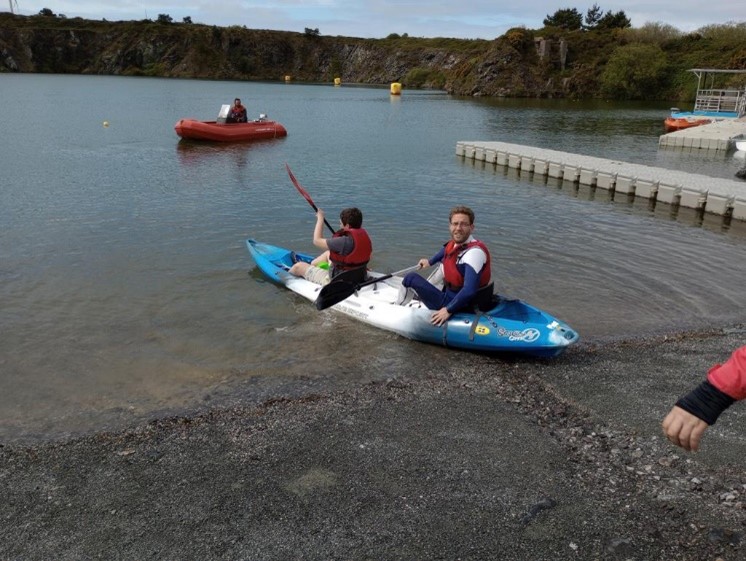
We created a nurturing learning environment and reviewed his needs regularly. C began to engage positively with those around him and gradually started to engage in his learning, later enjoying the extracurricular activities available to him such as paddle-boarding, swimming, kayaking, sport and fitness.
C’s mental health improved, and this had a positive impact on family life.
C engages in group learning and is very much part of the school community.
Learner D
D is a learner with Autism Spectrum Disorder (ASD) and significant learning and communication needs. Before joining our school, D was experiencing high levels of emotional distress. D found it difficult to communicate his needs, emotions or discomfort, increasing vulnerability and risk.
Our Trauma-Informed Approach
From the outset, staff recognised that D’s behaviour was a response to distress and unmet needs, rather than intentional behaviour. A trauma-informed, child-centred approach was used to help D feel safe, understood and supported.
Initial priorities focused on:
-
Establishing emotional and physical safety
-
Reducing sensory and environmental stress
-
Building trusting relationships before introducing learning expectations
A personalised plan was created to meet D’s individual needs and support his wellbeing.
Key Support Strategies
The following trauma-informed strategies were embedded into daily practice:
-
Consistent key adults to build trust and attachment
-
A calm, low-stimulus safe space to support emotional regulation
-
Flexible routines and reduced demands during times of distress
-
Calm, non-punitive responses to behaviour
-
Giving D choice and control over engagement and learning
-
Communication support
Listening to the Voice of the Child
As trust developed, D began to communicate verbally with key staff. This was a significant milestone. Through these conversations, D was able to share worries.
Staff responded promptly and appropriately, working closely with health and social care professionals. As a result, concerns were addressed, and D received the support he needed.
Impact and Outcomes
-
D reports feeling safe and settled in school
-
A significant reduction in high-risk and challenging behaviours
-
Improved emotional regulation and sensory tolerance
-
Improved and sustained attendance
-
Increased engagement in learning by choice
-
Rapid progress in communication and self-advocacy
-
Growing confidence and early peer relationships
Looking Ahead
D will continue to access a bespoke, person-centred curriculum with ongoing emotional and communication support. Transition planning will be carefully managed to ensure consistency, safety and continued progress.
Summary
This case study highlights how trauma-informed practice, skilled staffing and strong safeguarding procedures can transform outcomes for learners with complex needs. By prioritising safety, relationships and the voice of the child, D has been able to re-engage with education and make meaningful progress in both wellbeing and learning.